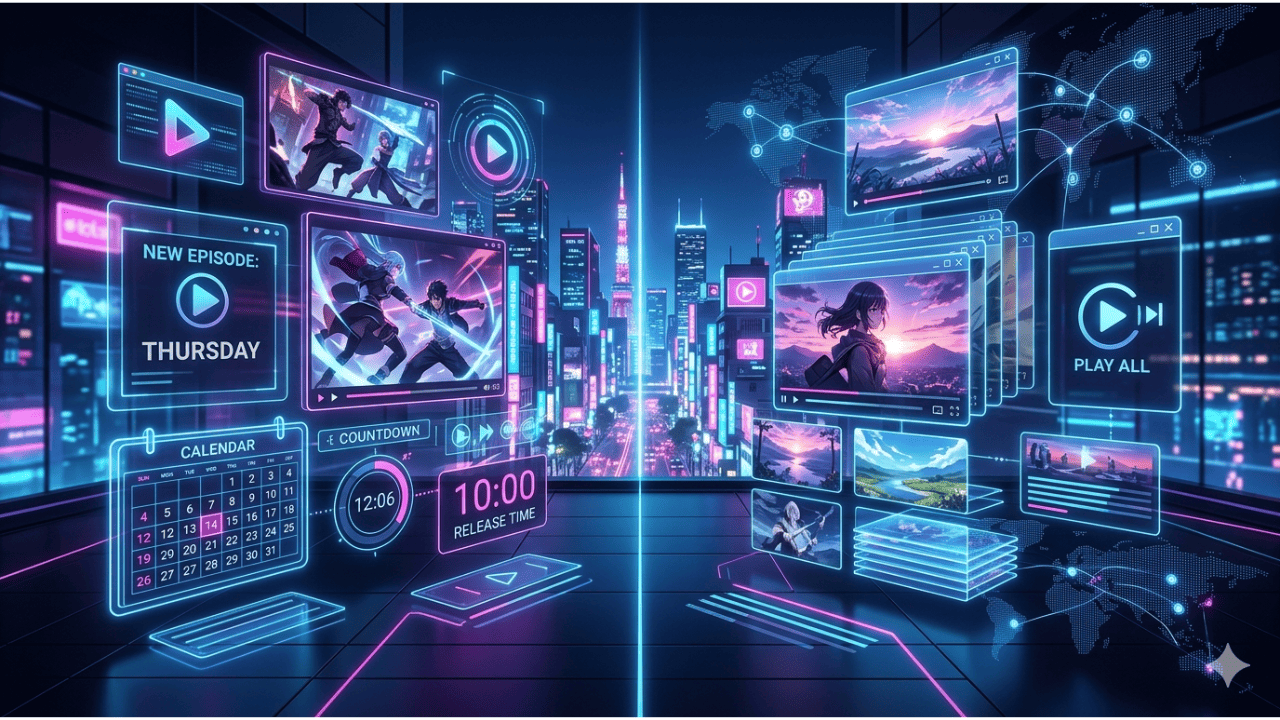
Anime has never been more accessible – or more complicated to follow. In 2026, anime streaming platforms are fundamentally changing how, when, and where fans watch their favourite shows. Whether you’re chasing a weekly simulcast drop or waiting for a full-season Netflix dump, the way anime reaches your screen is no longer straightforward. For UK viewers especially, navigating a fragmented landscape of subscriptions, regional licences, and competing platform strategies has become part of the hobby itself.
This pillar guide breaks down everything you need to know about the current state of anime streaming: from simulcast vs batch release debates to platform wars, licensing headaches, and what it all means for the industry long-term.
Why Anime Releases Feel Different in 2026
Cast your mind back just a decade. Anime fans in the UK either imported physical media, waited months for a dubbed broadcast, or – let’s be honest – found less official routes to watch.
Today, the landscape looks completely different. Titles like Demon Slayer, Jujutsu Kaisen, and Solo Leveling can reach UK screens within hours of their Japanese broadcast. But alongside that speed has come a new kind of complexity.
Multiple platforms now compete for licensing rights. Release strategies vary wildly. Some shows drop weekly; others arrive all at once. Some are exclusive to one service; others are split across two or three. For casual viewers and die-hard fans alike, keeping up requires a level of platform awareness that simply didn’t exist before.
This shift is at the heart of the biggest anime industry trends 2026 has brought to the surface – and understanding it starts with the most fundamental question: how is your anime actually being released?
Simulcast vs Batch Release: The Core Debate
If there’s one topic that divides the anime streaming community, it’s the anime simulcast vs batch release argument.
Simulcast means episodes are released weekly, often within hours of airing in Japan. Platforms like Crunchyroll have built their entire identity around this model. For fans, it creates a shared cultural moment – everyone watches at the same time, discourse explodes on social media, and the weekly wait becomes part of the experience.
Batch release (or “Netflix drop”) means an entire season lands in one go. Netflix popularised this with anime titles like Cyberpunk: Edgepower, Beastars, and Blue Eye Samurai. Some viewers love the binge-friendly format. Others resent being locked out of the conversation for months while simulcast fans move on.
There are genuine trade-offs on both sides:
- Simulcast pros: Community engagement, real-time reactions, faster access
- Simulcast cons: Long waits between episodes, cliffhanger fatigue
- Batch pros: Binge-friendly, polished release, no weekly waiting
- Batch cons: Delayed access, spoiler risk, reduced cultural momentum
For a deeper dive into which model suits different types of viewers, see our full breakdown on simulcast vs batch release explained.
Anime Streaming Platforms 2026: Who’s Winning the Race?
The platform landscape in 2026 is crowded – and each major player has a distinct strategy when it comes to anime.
Crunchyroll: The Simulcast Giant
Crunchyroll remains the dominant force for weekly simulcast anime. After its merger with Funimation, it now holds one of the largest anime libraries in the world and continues to be the go-to for fans who want episodes fast. Its simulcast pipeline covers hundreds of titles per season, and it has invested heavily in subtitles, dubs, and accessibility for global audiences including the UK.
Netflix: The Prestige Play
Netflix has taken a different approach. Rather than competing on volume, it targets high-profile exclusives and co-productions. Titles like Oni: Thunder God’s Tale, Ghost in the Shell: SAC_2045, and more recently Terminator Zero signal a strategy built around quality over quantity. The trade-off is the batch model – fans often wait months while simulcast audiences have already moved on.
The Crunchyroll vs Netflix anime debate is one of the defining conversations in the fandom right now. For a full head-to-head on which platform delivers more value, check out our guide on the best anime streaming platforms in the UK.
Other Players Worth Watching
- Disney+ has quietly built a respectable anime slate, particularly through its Star content hub in the UK
- Amazon Prime Video holds select simulcast licences and has co-produced titles like Vinland Saga
- HiDive caters to niche fans and often picks up licences for titles that larger platforms overlook
Platform Comparison: Release Style and UK Availability
| Platform | Release Model | UK Availability | Notable Titles |
|---|---|---|---|
| Crunchyroll | Simulcast (weekly) | Yes – dedicated UK service | Jujutsu Kaisen, One Piece, Frieren |
| Netflix | Batch (full season) | Yes | Cyberpunk: Edgepower, Terminator Zero |
| Amazon Prime Video | Mixed (simulcast + batch) | Yes | Vinland Saga, Mashle |
| Disney+ / Star | Batch / select simulcast | Yes | Bleach: TYBW (partial), Sand Land |
| HiDive | Simulcast (weekly) | Yes (via VPN workarounds in some cases) | Mushishi, Birdie Wing |
Understanding the anime release schedule streaming differences between these platforms is essential if you want to stay current without paying for every service on the market.
Streaming Exclusivity and the Fragmentation Problem
One of the most frustrating developments for modern anime fans is streaming exclusivity. Licensing deals mean that a show you want to watch might be on Crunchyroll in Japan, Netflix in the UK, and Amazon in Australia – with no overlap.
This fragmentation has real consequences:
- Fans are pushed into paying for multiple subscriptions simultaneously
- Some titles remain completely unavailable in certain regions due to unresolved licensing
- Exclusive deals can delay international releases by months or even years
- Smaller, niche titles often fall through the cracks entirely
Anime licensing and distribution has become one of the most complex corners of the entertainment industry. Rights can be split by territory, language, format (sub vs dub), and platform – meaning the same show might be legally available in a dozen different configurations around the world.
For UK fans, this is especially pronounced. The UK market sits in an interesting middle ground – large enough to attract major platform investment, but still occasionally overlooked in favour of larger US or European deals. Knowing where to watch anime in the UK often requires research that shouldn’t be necessary in theory, but very much is in practice.
The UK Guide to Anime Streaming Platforms in 2026
Streaming anime UK fans have more options than ever before – but more friction too.
Crunchyroll is available across all major devices in the UK and covers most seasonal simulcasts. Netflix UK regularly adds anime to its library, though often later than other regions. Amazon Prime UK has a healthy selection, and Disney+ offers a growing slate through Star.
For UK viewers trying to identify the best anime streaming platform UK has to offer, it often comes down to priorities:
- Speed and volume? Crunchyroll wins.
- Prestige and originals? Netflix leads.
- Value within an existing subscription? Amazon Prime or Disney+ may already have what you need.
Regional pricing also plays a role. Crunchyroll’s UK subscription tiers are competitive, and the ad-supported tier makes it accessible to more casual fans. Netflix’s UK pricing is higher, but bundles anime within a much broader content library.
For a comprehensive breakdown tailored to British viewers, our guide on where to watch anime in the UK covers platform-by-platform recommendations across budgets and genres.
How Streaming Changed the Anime Industry
The impact of digital distribution anime goes far beyond convenience. It has reshaped the economics, creative decisions, and global reach of the entire industry.
Revenue flows have shifted. Physical media sales, once a critical revenue stream for anime studios, have declined sharply. Streaming licensing fees now represent a primary income source – which means platform deals directly influence what gets made and how.
Production budgets have increased. Netflix and Amazon’s appetite for premium co-productions has pushed production values higher. MAPPA, Ufotable, and other top studios have benefited from international investment, resulting in visually spectacular series.
Global audiences are shaping content. For the first time, studios are aware that their shows are being watched simultaneously in the UK, Brazil, and South Korea. This is quietly influencing narrative choices, pacing, and character design.
But challenges remain. Smaller studios struggle to compete for streaming contracts. Some mid-tier shows don’t attract international licensing deals at all, leaving them invisible to non-Japanese audiences. The how streaming changed anime industry conversation is still very much ongoing – and not without its controversies.
The Future of Anime Streaming Platforms in 2026
Where does all this lead? The trajectory of anime streaming platforms 2026 points toward continued growth, deeper exclusivity battles, and – hopefully – more transparent regional availability. For fans and critics alike, anime streaming platforms 2026 represent a turning point in how the world consumes Japanese animation.
A few trends worth watching:
- AI-assisted dubbing and localisation is accelerating, which could close the gap between Japanese broadcast and English-language release
- Platform consolidation may reduce fragmentation if smaller services are absorbed by larger ones
- Live-event simulcasts are growing – theatrical simulcast screenings for major premieres are becoming a meaningful part of the fan experience in the UK
- Creator-direct models are emerging, where studios bypass traditional licensing to distribute via their own apps or hybrid platforms
The relationship between anime fans, streaming services, and studios is evolving quickly. For a forward-looking take on where this industry is heading, explore our piece on the future of anime streaming.
Conclusion
Anime in 2026 is global, fast, and more varied than at any point in history. But that accessibility comes with a web of platform strategies, regional licensing quirks, and release model debates that fans now have to navigate as part of their viewing experience.
Whether you’re a UK viewer hunting down the best value subscription, a simulcast devotee who lives for Saturday morning episode drops, or someone who prefers to binge an entire season in a weekend – the streaming landscape has something for you. Knowing where to seek and what each network genuinely offers is crucial.
This guide is the starting point. The articles linked throughout will take you deeper into each dimension of the anime streaming services comparison – so you can watch smarter, spend less, and miss nothing.
FAQ
What are the best anime streaming platforms in the UK in 2026?
Crunchyroll is the top choice for simulcast fans, offering the widest seasonal selection. Netflix leads for premium originals and co-productions. Amazon Prime Video and Disney+ offer solid supplementary libraries, often bundled with existing subscriptions.
What is the difference between simulcast and batch anime releases?
Simulcast releases new episodes weekly, usually within hours of the Japanese broadcast. Batch releases (associated with Netflix) drop an entire season at once. Simulcast builds real-time community engagement; batch suits binge-watching but can delay access to ongoing conversation.
Why is some anime not available in the UK on certain platforms?
Anime licensing is split by territory. A studio may sell UK rights to one platform and US rights to another, meaning availability varies by country. Some titles have no UK deal at all, leaving them inaccessible through legal streaming services.
Is Crunchyroll better than Netflix for anime?
It depends on your priorities. Crunchyroll offers more titles, faster simulcast access, and a dedicated anime-first experience. Netflix offers higher-budget originals and co-productions but uses a batch release model and has a smaller overall anime library.
How has streaming affected the anime industry?
Streaming has globalised anime audiences, increased production budgets through international licensing deals, and shifted revenue away from physical media. It has also created fragmentation challenges through platform exclusivity, with some mid-tier titles struggling to secure international distribution at all.