Skills Needed for 2030: Future-Proof Your Career

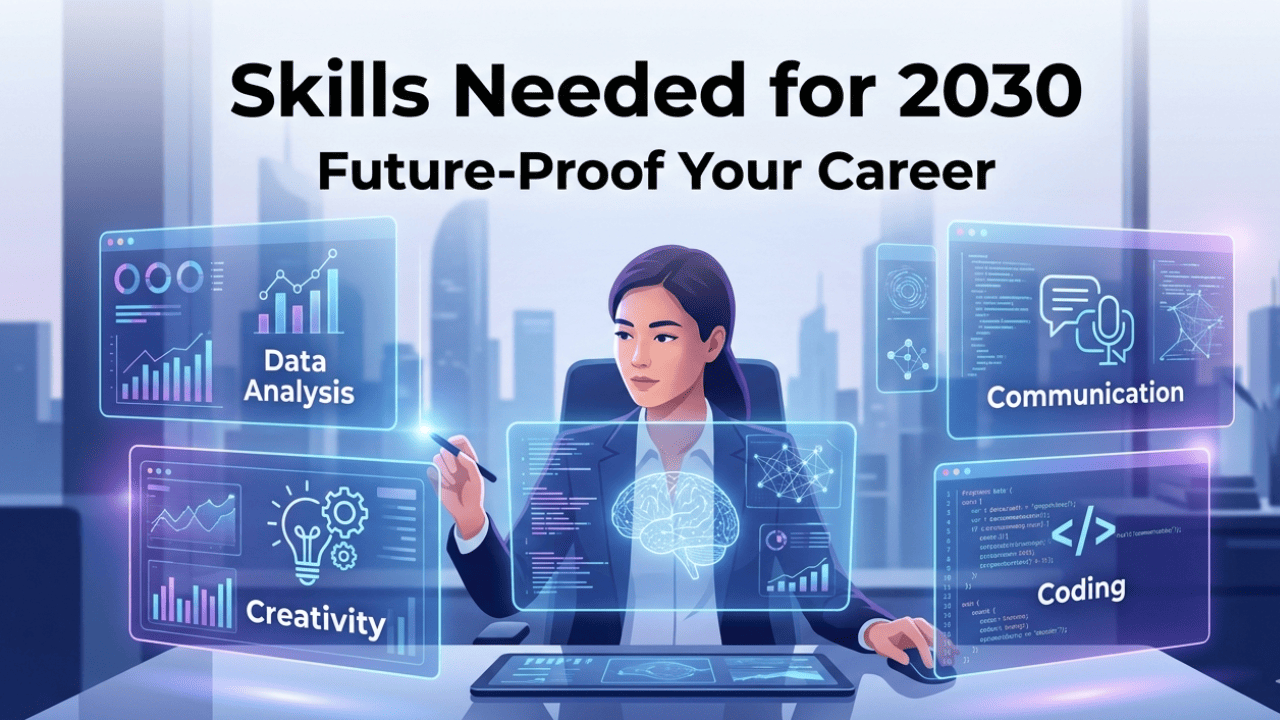
Introduction The job market is changing faster than ever. The skills needed for 2030 are very different from what employers wanted just ten years ago. Therefore, if you are not preparing now, you may fall behind. To stay competitive, you need to understand which skills will matter most in the years ahead. Automation, artificial intelligence, and digital transformation are reshaping every industry. However, this shift also creates exciting new opportunities. The key is knowing what to learn — and starting early. For more context on how technology is evolving, read our guide on technology trends next 5 years. Why the Skills Needed for 2030 Are Changing So Fast AI and automation are replacing many routine tasks. As a result, jobs that once required manual effort are now handled by machines. Also, digital transformation is pushing companies to work faster, smarter, and more efficiently. Traditional skills like data entry or basic…

Jobs in 2030: Careers That Will Exist in the Future

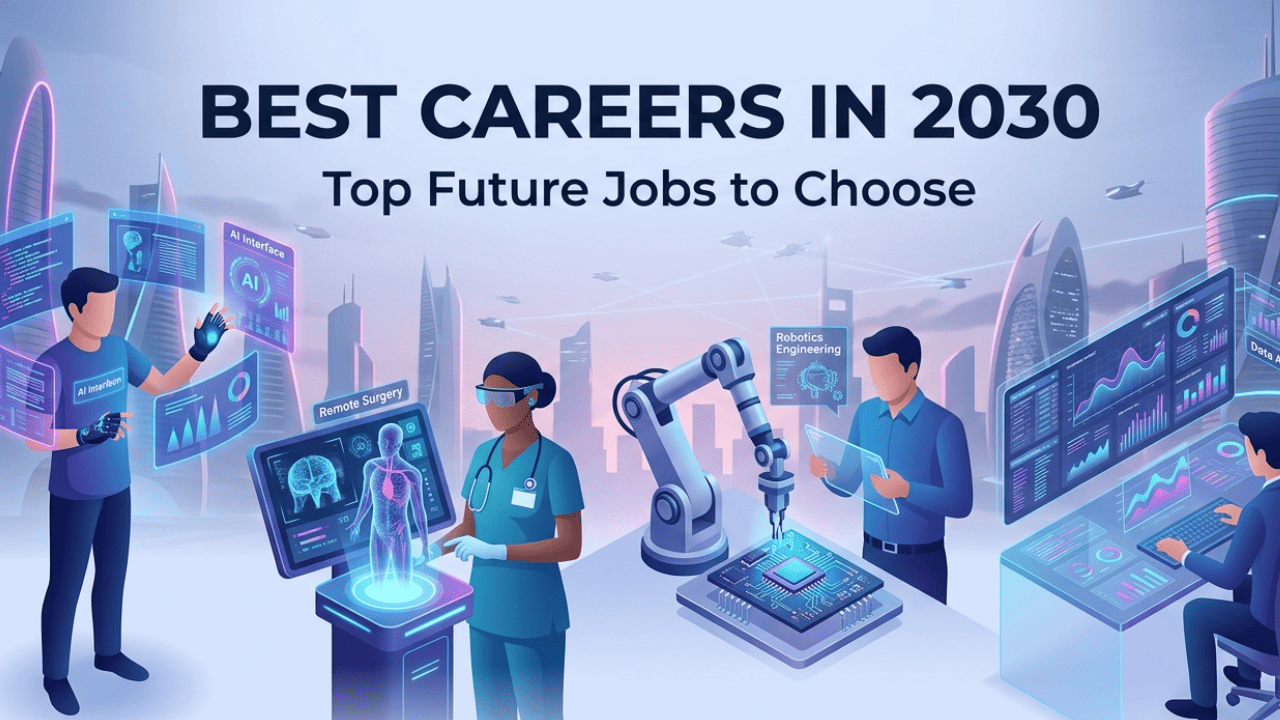
Introduction The workplace is evolving more quickly than in the past. Jobs in 2030 will look very different from the jobs we know today. New technologies are reshaping entire industries. As a result, millions of people are asking the same question: what careers will actually exist in the future? Some roles are already disappearing. Meanwhile, brand-new job titles are emerging every year. Understanding these shifts now can give you a real advantage. To put this in context, it helps to look at the broader technology trends next 5 years that are driving these changes. The good news? You have time to prepare. Let's explore what's coming. Why Future Jobs Are Changing So Fast Technology is the biggest driver of change in the workplace. Artificial intelligence can now do tasks that once required years of human training. Automation is replacing repetitive work in factories, offices, and even hospitals. Digital transformation is…

Life in 2030: What the Future Will Look Like

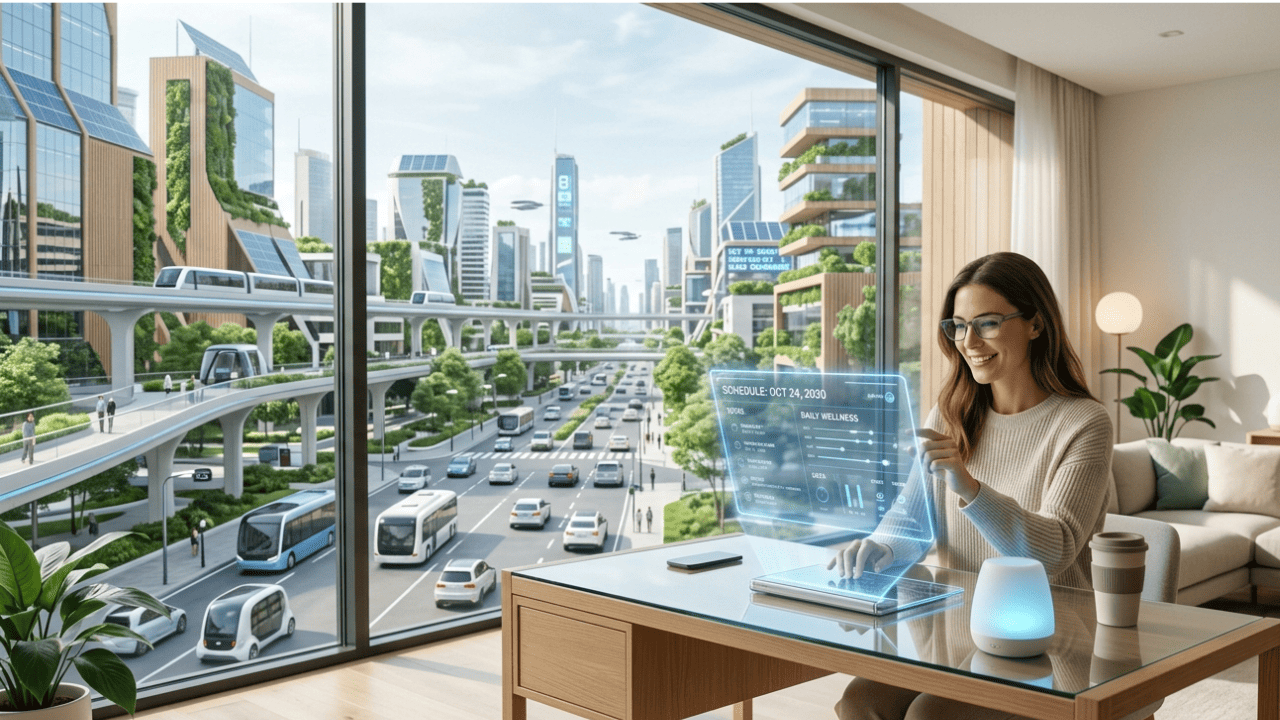
Introduction Imagine waking up in 2030. Your home already knows you're awake. The lights adjust themselves. A calm AI voice reads your schedule while your coffee brews automatically. This is not science fiction. Life in 2030 is closer than most people think. Over the next few years, AI, smart cities, and automation will reshape everything. From how we work to how we heal, change is coming fast. Understanding the technology trends next 5 years can help you prepare for what's ahead. What Will Daily Life Look Like in 2030? Future life will feel deeply personal. Smart homes will learn your habits and adjust to your needs. Forgot to lock the door? Your home handles it. Too warm inside? The thermostat already knows. AI assistants will go far beyond today's voice apps. They will manage your calendar, suggest meals based on your health data, and even remind you to rest. Moreover,…

Future Technology Trends 2030: What Will Change Next

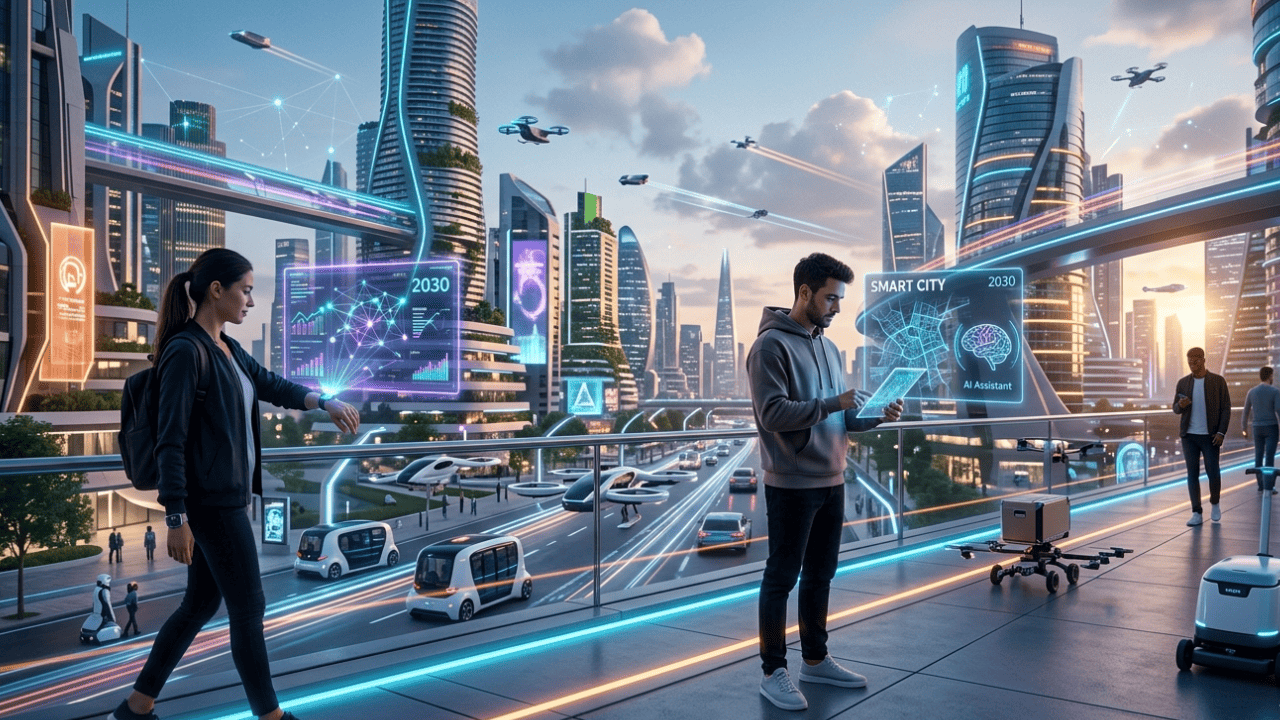
Introduction The world is changing more quickly than it has in the past. Future technology trends are reshaping how we live, work, and connect with each other. By 2030, the gap between science fiction and reality will shrink dramatically. Think about this: ten years ago, most people had never heard of AI assistants or electric self-driving cars. Today, they are part of everyday life. So, what comes next? Rapid innovation is touching every corner of the globe. From hospitals in Tokyo to schools in rural Kenya, emerging technologies are creating new possibilities. Understanding what is coming can help you prepare - and even thrive. Why Future Technology Trends Matter More Than Ever "Why should I care about technology in 2030?" you may ask yourself. The answer is straightforward: you will be directly impacted. Jobs are already changing. Automation is handling tasks that once needed human hands. Businesses must adapt or…

AI security risks 2026: threats and protection guide

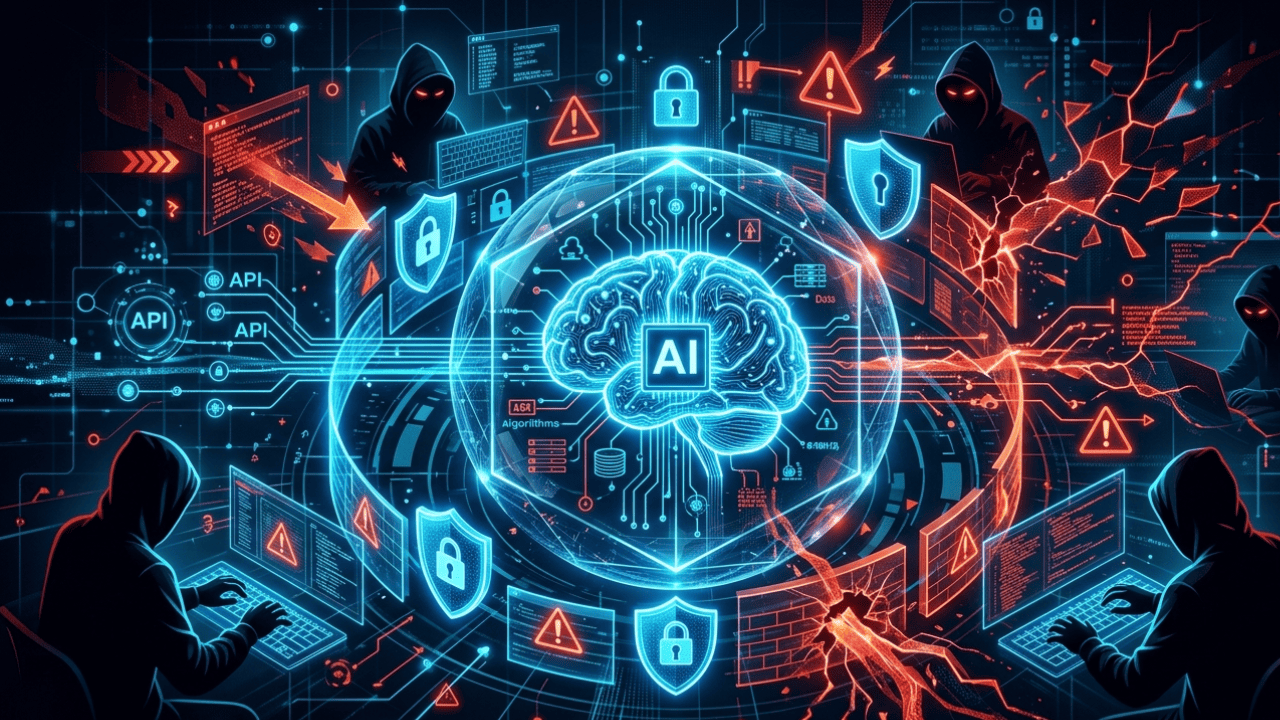
Introduction AI is growing fast. Businesses now use artificial intelligence for customer service, data analysis, hiring, and more. However, this rapid growth comes with a serious downside. AI security risks are rising at an alarming rate in 2026. Attackers are learning how to exploit AI systems in ways that never existed before. Every new AI tool creates a new potential entry point. In addition, many organisations deploy AI faster than their security teams can keep up. As a result, cybercriminals have more opportunities than ever. Understanding these risks is the first step to staying protected. What are AI security risks? AI security risks are the ways that AI systems can be attacked, manipulated, or misused. Unlike traditional software, AI learns from data. Therefore, it can be tricked in ways that standard code cannot. Traditional systems follow fixed rules. AI systems, however, make decisions based on patterns and probabilities. This means attackers can…

Zero Trust Security for AI Systems: Why Traditional Security Models Fail in 2026

Introduction Zero trust AI systems are becoming essential in 2026 as artificial intelligence continues to evolve rapidly. Old security rules no longer work against modern AI-driven threats. Hackers now use advanced AI tools to find system weaknesses faster than ever. It is widely recognized in frameworks like NIST Zero Trust Architecture. Traditional firewalls fail against modern artificial intelligence. These firewalls were built for a different era of technology. They were designed to keep people out of a physical building. Today, we face entirely new digital threats that don't care about physical walls. Networks are no longer simple and contained. They stretch across the globe through cloud servers and remote devices. This makes defending them incredibly complex for IT teams. You cannot protect what you cannot see or define. The stakes have never been higher for modern businesses. A single AI breach can ruin a company’s reputation forever. Customers will not…

Supply Chain Risks in Agentic AI Systems: Hidden Threats in AI Ecosystems (2026)

In 2026, one of the hazards that is expanding the quickest is supply chain risks related to AI. These days, AI systems are connected to third-party tools, plugins, and APIs. Attackers might use any connection as a point of entry. What Are Supply Chain Risks in AI? A supply chain attack happens when a threat actor targets a dependency rather than the main system. Think of it like poisoning a water supply instead of attacking one house. In AI, that means targeting the tools, models, APIs, or data your AI system depends on. If any piece is compromised, the whole system can be affected. Simple definition: If your AI trusts a tool, and that tool is evil — your AI is compromised. Why Agentic AI Makes Supply Chain Risks Worse Traditional software runs fixed instructions. Agentic AI takes autonomous actions, calls tools, and makes decisions on its own. That autonomy…

AI Identity Attacks in Cybersecurity: How Agentic AI Is Exploiting Credentials in 2026

Introduction: Identity Is the New Perimeter - And AI Has Found the Gap In 2026, AI identity attacks in cybersecurity have become the defining threat facing enterprises. The most dangerous entry point into an organization is no longer an unpatched server or a misconfigured cloud bucket. It's an identity. Attackers have known this for years. But what's changed — dramatically — is who is doing the attacking. Artificial intelligence, specifically autonomous agentic AI systems, has transformed the threat landscape in ways most security teams are still scrambling to understand. AI identity attacks in cybersecurity are no longer theoretical. They are active, scalable, and increasingly hard to detect. Traditional breach patterns followed a relatively predictable arc: reconnaissance, exploitation, lateral movement, exfiltration. Human operators made decisions. Mistakes were made. Attackers left traces. Today's AI-powered adversaries compress that arc into minutes, operate with machine precision, and adapt in real time to every defensive…

Securing Agentic AI: Identity, Supply Chain & Autonomous Cybersecurity Risks in 2026

A comprehensive guide to agentic AI security, AI agent cybersecurity, and autonomous AI risks Introduction: The Dawn of the Autonomous AI Era Imagine a world where software doesn't just respond to commands - it acts on its own, makes decisions, and operates across your entire digital infrastructure without requiring a human to click a single button. Indeed, that world is already here. Agentic AI security is no longer a theoretical challenge; it is one of the most urgent priorities facing every organization in 2026. In fact, AI agents are now booking meetings, writing and deploying code, managing cloud infrastructure, responding to customer queries, and even monitoring other security systems - all autonomously. This explosive growth in autonomous AI capabilities has fundamentally changed the cybersecurity landscape. Historically, traditional security models were built around the assumption that a human sits at the center of every important action. A person logs in, a…

Keto Meal Prep for Busy Professionals: Easy Low-Carb Planning Guide for 2026

Staying on track with keto when you have back-to-back meetings, a packed commute, and very little time to cook sounds like a challenge - which is why keto meal prep for busy professionals is a game-changer. Most people fall off their low-carb diet not through lack of willpower, but through lack of preparation. You get to lunch with nothing ready, grab whatever is easiest, and end up derailing a week's progress in one meal. That's exactly why keto meal prep for busy professionals is such a game-changer. Whether you're a lawyer, marketer, or remote worker, keto meal prep for busy professionals removes the guesswork from your entire week. You may eat healthily during the week if you set aside a few concentrated hours on the weekend, free from stress, worry and pricey food. This guide gives you everything you need: practical steps, real meal ideas, budget-friendly tips (including for UK…