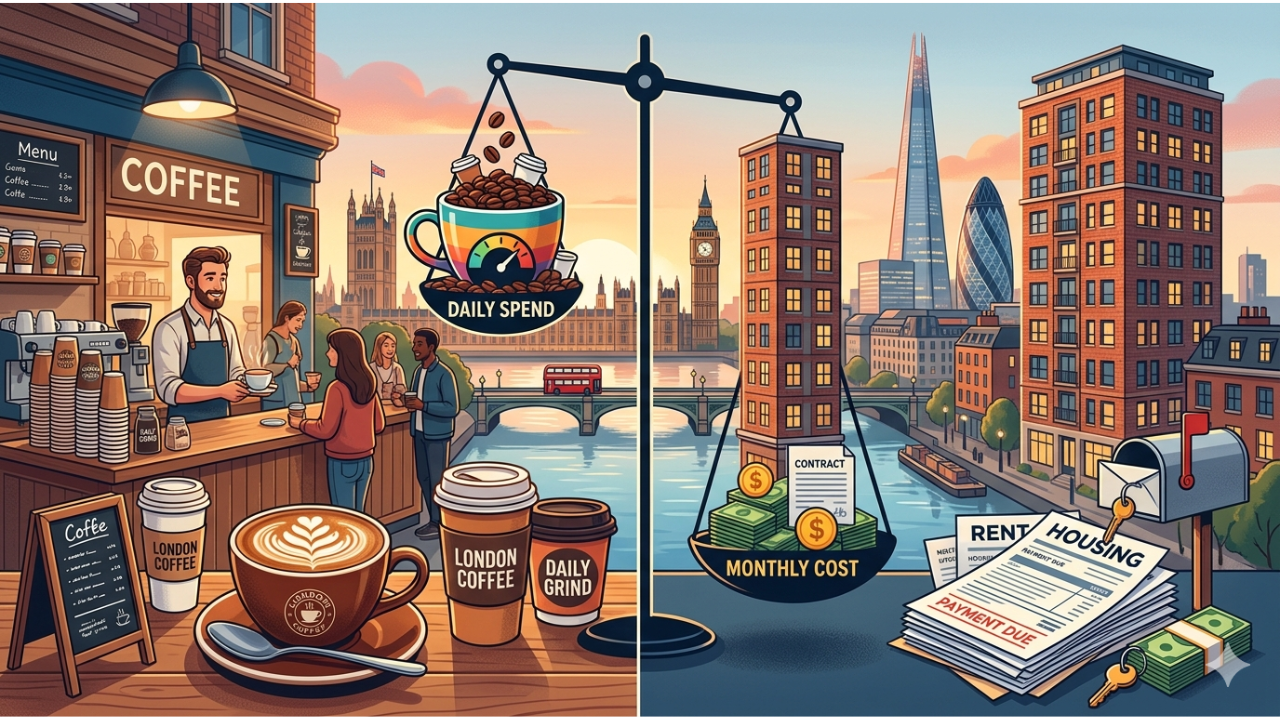
If you live in London, you already know the city doesn’t come cheap. But have you ever stopped to calculate the true cost of coffee vs rent London style — down to the last penny? The numbers are more eye-opening than you might expect. Between the average monthly rent in London 2026 and the creeping cost of your daily flat white, Londoners are navigating one of the world’s most expensive cities one small decision at a time.
This isn’t just a fun thought experiment. It’s a genuine London living expenses comparison that reveals how discretionary spending and fixed expenses collide — and what that means for your financial wellbeing.
How Much Does Rent Actually Cost in London Right Now?
Let’s start with the big one. According to recent market data, the average rent in London 2026 sits at approximately £2,300–£2,600 per month for a one-bedroom flat, depending on the borough. In prime zones like Kensington, Chelsea, or the City, that figure climbs well above £3,000.
Break it down further:
- Zone 1–2 (Central London): £2,500–£3,500/month for a one-bed
- Zone 3–4 (Outer London): £1,700–£2,200/month for a one-bed
- Zone 5–6 (Commuter fringe): £1,300–£1,700/month for a one-bed
That’s before you factor in council tax, utilities, and broadband — all of which can add another £300–£500 to your monthly outgoings. For most Londoners, rent alone consumes 40–60% of their take-home pay. That’s not a lifestyle choice. That’s just survival.
The Real Average Coffee Price in London (It’s Higher Than You Think)
A standard flat white or oat milk latte at a London café now costs between £4.50 and £6.50, with many specialty shops pushing closer to £7 once you add plant-based milk. The average coffee price in London across chains and independents hovers around £5.00–£5.50 in 2026.
That might not sound alarming on its own. But London’s coffee culture is deeply embedded in daily life. A survey of UK consumer spending habits found that the average office worker buys coffee out 2–3 times per weekday — and that’s before weekend brunches enter the picture.
Here’s what that actually costs per month:
- 1 coffee/day × £5 × 22 workdays = £110/month
- 2 coffees/day × £5 × 22 workdays = £220/month
- Add weekend coffees (2/week × £5 × 4 weeks) = £40/month extra
So how much do Londoners spend on coffee per month? A conservative estimate puts it at £110–£260, depending on habits. That’s not a trivial number.
Coffee vs. Rent London: The Numbers Side by Side
Here’s where things get genuinely startling. Let’s put the two side by side in a real-world comparison.
London Coffee vs. Rent Comparison Table (2026 Estimates)
| Expense | Daily Cost | Monthly Cost | Annual Cost |
|---|---|---|---|
| Average London rent (Zone 2–3, 1-bed) | £75–£87/day | £2,300–£2,600 | £27,600–£31,200 |
| 1 coffee/day (flat white, £5) | £5/day | ~£110 | ~£1,320 |
| 2 coffees/day (incl. weekends) | £10/day | ~£260 | ~£3,120 |
| Coffee as % of rent (1/day) | — | ~4.8% | ~4.8% |
| Coffee as % of rent (2/day) | — | ~11.3% | ~11.3% |
At two coffees a day, Londoners are spending over 10% of their rent purely on hot drinks. Over a decade, that’s more than £31,000 — enough for a full deposit on a property in many parts of the UK outside London.
It’s a striking illustration of how small expenses add up over time in the UK, especially in a city where every pound is already under pressure.
The London Cost of Living Breakdown Nobody Talks About
Rent and coffee are just two lines in a much longer budget. Here’s a fuller picture of what cost of living in London actually looks like month to month for a single person:
| Expense Category | Monthly Estimate (2026) |
|---|---|
| Rent (Zone 2–3, 1-bed) | £2,300–£2,600 |
| Groceries | £250–£350 |
| Transport (TfL zones 1–3) | £180–£220 |
| Utilities + broadband | £150–£250 |
| Eating out / takeaways | £150–£300 |
| Coffee out | £110–£260 |
| Gym / fitness | £40–£80 |
| Streaming / subscriptions | £30–£60 |
| Total estimate | £3,210–£4,120/month |
That’s a monthly spend of up to £4,120 — or nearly £50,000 per year — just to live a fairly modest London life. Understanding this London cost of living breakdown is the first step to taking control of it.
Why Coffee Feels Cheap But Isn’t: The Psychology of Small Spending
There’s a reason coffee spending rarely features in people’s budget anxieties the way rent does. Psychologically, we process discretionary spending vs fixed expenses very differently. Rent arrives as a single, painful monthly debit. Coffee disappears in a series of small, pleasurable moments.
But this is precisely what makes it dangerous.
Behavioural economists call this the “latte effect” — the cumulative financial impact of small, regular purchases that feel negligible in isolation. At £5 a pop, each coffee purchase barely registers. At £260 a month, it very much should.
UK consumer spending habits data confirms the pattern. British adults routinely underestimate how much they spend on coffee, food-to-go, and subscription services combined. In a 2025 survey, the average respondent guessed their monthly coffee spend at around £40 — roughly four times lower than their actual expenditure.
This isn’t a moral failing. It’s how our brains are wired. But knowing the gap between perception and reality is powerful.
Personal Finance London Lifestyle: What Can You Actually Change?
Given that rent is largely fixed — you can’t negotiate your way to a cheaper Zone 2 flat overnight — coffee is one of the few daily expenses where small changes create real results. Here are practical budgeting in London tips that don’t require you to give up caffeine entirely:
Switch at least one coffee a day to home-brewed. A bag of quality specialty coffee beans costs £10–£14 and yields around 30 cups. That’s roughly 45p per cup vs £5 at a café — a saving of over £100/month if you make the switch for one daily coffee.
Use a reusable cup for discounts. Many London chains — including Pret, Costa, and independent cafés — offer 25–50p off per cup for bringing your own. Over a month, that’s a potential saving of £10–£20 with zero lifestyle change.
Set a weekly coffee budget. Rather than tracking per cup, give yourself a fixed weekly allowance (e.g., £20) and stick to it. This preserves the pleasure of café culture without the unchecked accumulation.
Make café visits intentional, not habitual. The difference between a coffee you savour and a coffee you buy on autopilot en route to the office is enormous — both for enjoyment and your bank balance.
Small tweaks won’t close the gap between your salary and your rent. But they compound over time in ways that genuinely matter for your personal finance London lifestyle.
Coffee vs Rent London: What It Means in 2026
The cost of living in London isn’t getting easier. Rental prices rose approximately 6–8% year-on-year between 2024 and 2026, and café prices have tracked similarly upward in line with food and energy inflation.
For younger Londoners in particular — those renting in their late twenties and thirties without inherited wealth or family support — the margin between income and outgoings is razor-thin. In that context, understanding every layer of your budget isn’t frugality. It’s financial literacy.
The coffee-vs-rent comparison isn’t designed to shame anyone out of their morning ritual. It’s designed to make visible something that’s been invisible: the compound cost of daily choices in one of the world’s most expensive cities.
Awareness is the first move. What you do with it is up to you.
Conclusion: Small Cups, Big Consequences
London is a city of contradictions — extraordinary culture, brutal costs. The cost of coffee vs rent London comparison lays bare a truth that urban living cost analysis often glosses over: the small stuff matters, especially here.
At £260 a month on coffee, Londoners are spending £3,120 a year on something most wouldn’t list as a financial priority. That’s a holiday. A large portion of an emergency fund. A year’s worth of ISA contributions.
None of this means you should stop enjoying coffee — or London. But in a city where the average monthly rent in London 2026 eats half your salary before you’ve bought a single grocery item, knowing exactly where every pound goes isn’t a nice-to-have.
It’s a necessity.
FAQ
How much does the average Londoner spend on coffee per month?
Based on current coffee prices and consumption habits, the average Londoner who buys coffee out regularly spends between £110 and £260 per month — equivalent to one to two coffees per day on workdays, plus occasional weekend purchases.
What will London’s average rent be in 2026?
The average monthly rent in London 2026 for a one-bedroom flat is approximately £2,300–£2,600 in mid-zones (Zone 2–3), with central London properties often exceeding £3,000 per month.
Is coffee spending really significant compared to London rent costs?
Yes — at two coffees a day, coffee spending can represent 10–11% of the average monthly rent. Over a year, that’s over £3,000, and over a decade, more than £31,000. In the context of a London living expenses comparison, it’s one of the most controllable discretionary expenses available.
What are the best budgeting tips for living in London?
Key budgeting in London tips include: brewing at least one coffee at home daily, using reusable cups for café discounts, setting a fixed weekly discretionary budget, reviewing subscriptions monthly, and tracking all spending (not just big-ticket items) to see where money actually goes.
How does coffee spending compare to other daily expenses in London?
Coffee sits in a mid-tier category of London daily expenses — more than a single tube journey (£2.80), less than eating out for lunch (£10–£15). But its frequency makes it uniquely impactful. Unlike a one-off restaurant meal, coffee is often an automatic, daily purchase that bypasses conscious decision-making entirely.