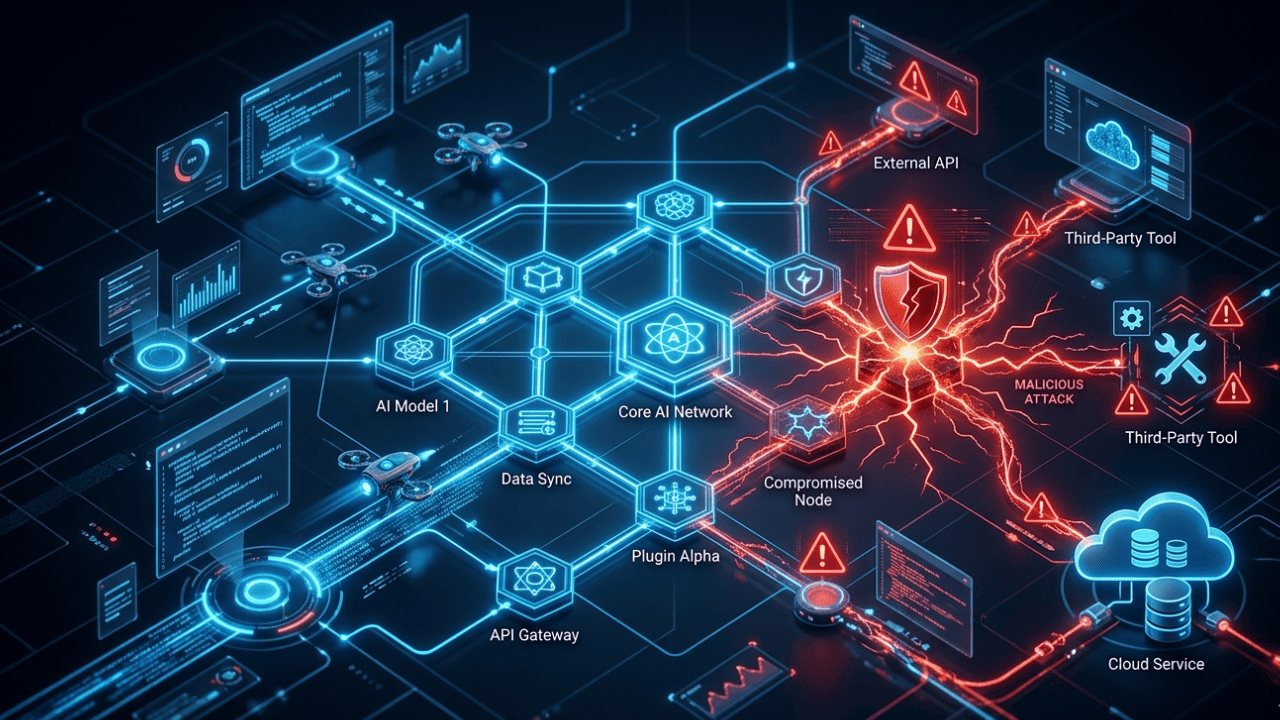
AI security risks 2026: threats and protection guide
Introduction AI is growing fast. Businesses now use artificial intelligence for customer service, data analysis, hiring, and more. However, this rapid growth comes with a serious downside. AI security risks are rising at an alarming rate in 2026. Attackers are learning how to exploit AI systems in ways that never existed before. Every new AI tool creates a new potential entry point. In addition, many organisations deploy AI faster than their security teams can keep up. As a result, cybercriminals have more opportunities than ever. Understanding these risks is the first step to staying protected. What are AI security risks? AI security risks are the ways that AI systems can be attacked, manipulated, or misused. Unlike traditional software, AI learns from data. Therefore, it can be tricked in ways that standard code cannot. Traditional systems follow fixed rules. AI systems, however, make decisions based on patterns and probabilities. This means attackers can…