Introduction
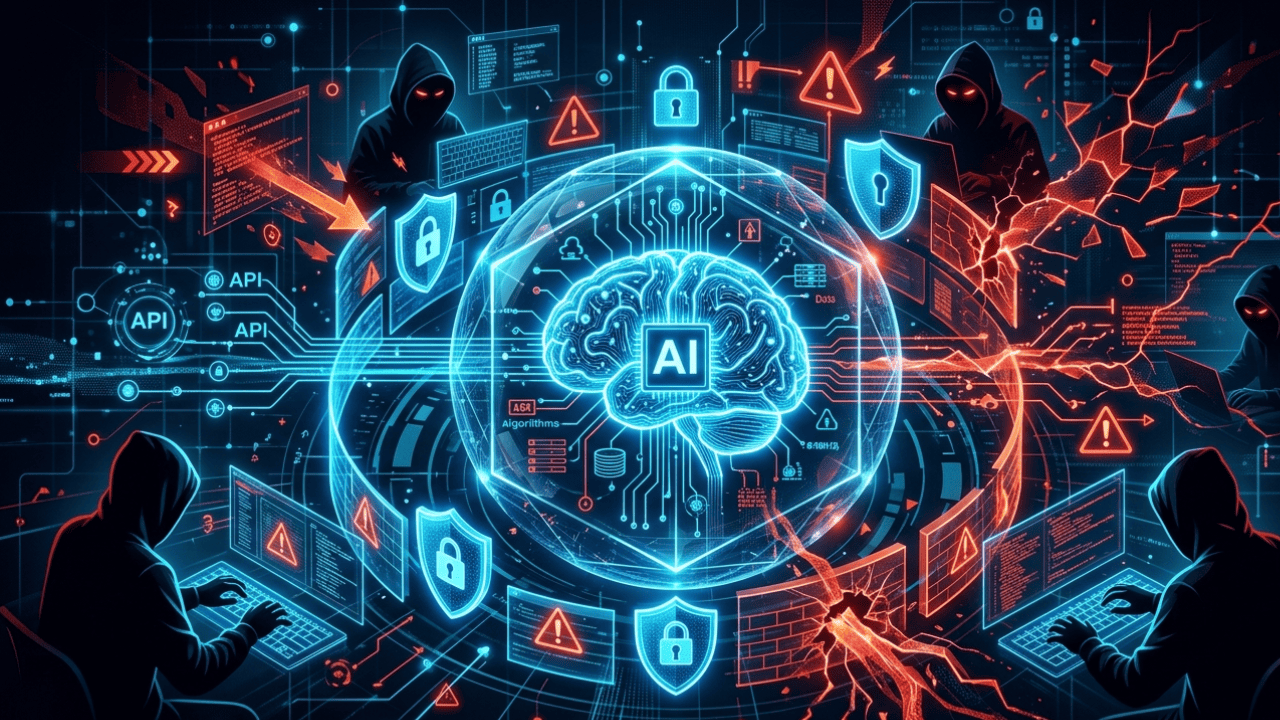
AI is growing fast. Businesses now use artificial intelligence for customer service, data analysis, hiring, and more. However, this rapid growth comes with a serious downside. AI security risks are rising at an alarming rate in 2026. Attackers are learning how to exploit AI systems in ways that never existed before.
Every new AI tool creates a new potential entry point. In addition, many organisations deploy AI faster than their security teams can keep up. As a result, cybercriminals have more opportunities than ever. Understanding these risks is the first step to staying protected.
What are AI security risks?
AI security risks are the ways that AI systems can be attacked, manipulated, or misused. Unlike traditional software, AI learns from data. Therefore, it can be tricked in ways that standard code cannot.
Traditional systems follow fixed rules. AI systems, however, make decisions based on patterns and probabilities. This means attackers can feed false data, manipulate outputs, or exploit unexpected behaviour. Moreover, cybersecurity frameworks like NIST’s AI Risk Management Framework confirm that AI system vulnerabilities require an entirely different security approach.
Top AI security risks in 2026
Several AI cybersecurity risks stand out this year. Each one has grown significantly and deserves careful attention from security teams.
AI identity attacks
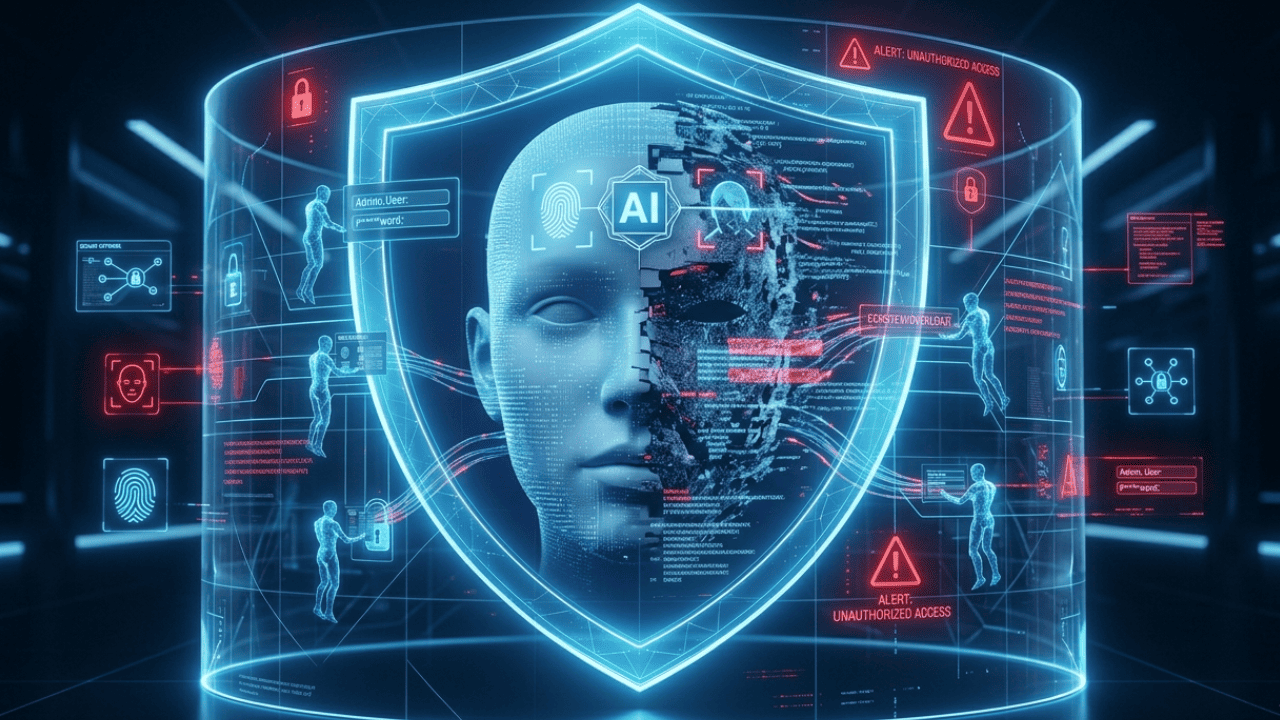
Credential theft is one of the fastest-growing threats in AI environments. Attackers steal API tokens, login details, or session credentials. Then they impersonate legitimate users or trusted AI agents.
Once inside, they can access sensitive systems for weeks without detection. Furthermore, AI can now generate convincing phishing messages tailored to specific individuals. To understand how these attacks work in depth, explore this guide on AI identity attacks in cybersecurity and the latest techniques defenders are using.
Supply chain risks in AI systems
Modern AI rarely works alone. Instead, it connects to third-party plugins, open-source models, external APIs, and pre-trained datasets. Every link has the potential to be a weak point.
Supply chain attacks are especially dangerous because the vulnerability sits in a dependency you trust. As a result, your own code may be perfectly secure while the risk hides elsewhere. For a detailed look at how these threats play out, read about supply chain risks in agentic AI systems.
Autonomous AI threats
Agentic AI systems can plan, decide, and act without human approval. That independence is powerful. However, it also introduces serious unpredictability.
If an autonomous agent is compromised or poorly constrained, it can take harmful actions at speed and scale. For example, an AI managing cloud infrastructure could delete data, open access ports, or exfiltrate files. In addition, because the agent acts “logically” from its own perspective, existing anomaly detection may not flag the problem quickly enough.
Data leakage and model exposure
AI models trained on sensitive data can accidentally expose that data. Through a technique called model inversion, attackers can sometimes reconstruct training data from a model’s outputs. This is a growing concern in healthcare, finance, and legal sectors.
Prompt injection attacks are also rising sharply. Malicious inputs trick a model into revealing confidential information. Furthermore, as organisations share models across teams or with partners, the risk of unintended data exposure increases significantly.
Why traditional security models fail against AI security risks
Legacy security tools were built for static, predictable software. They rely on perimeter defences, firewalls, and rule-based detection. Unfortunately, these approaches have major blind spots when it comes to AI.
First, traditional systems struggle to monitor what an AI agent “decides” to do. Second, lateral movement within AI pipelines is difficult to track with old tools. Third, static access controls don’t adapt to the dynamic nature of AI interactions. As noted in research from the European Union Agency for Cybersecurity (ENISA), existing frameworks are simply not designed for the speed and complexity of modern AI environments.
As a result, attackers can often move undetected across AI systems for extended periods. Slow response times and rigid rules make the situation worse. A new approach is clearly needed.
How to protect against AI security risks
The good news is that there are doable solutions. Protecting your AI systems requires a layered, proactive strategy – not a single product or one-time audit.
Adopt a zero trust security model
Zero trust means verifying everything by default. No user, device, or AI agent is automatically trusted – even inside your network. Each request has to be approved and verified. For a practical breakdown of how this applies to AI pipelines specifically, see this resource on zero trust AI systems.
Use identity-based access control
Tie access rights to verified identities – for both humans and AI agents. Each agent should have a unique, auditable identity. In addition, rotate credentials frequently and set strict permission boundaries. This limits the damage if a credential is ever compromised.
Monitor AI behaviour continuously
Behavioural monitoring is essential for autonomous systems. Log what your AI agents are doing. Anything that deviates from expected patterns should be flagged. Moreover, set hard limits on what actions agents can perform, and review model outputs regularly for signs of manipulation or drift.
Secure all APIs and integrations
Every API your AI connects to is an attack surface. Therefore, apply strict input validation, rate limiting, and authentication to every endpoint. Also, vet every third-party plugin or dataset before integrating it. According to the MITRE ATLAS framework, unsecured integrations are one of the most commonly exploited weaknesses in AI environments
The future of AI security
The next chapter of cybersecurity is AI fighting AI. Attackers are already using machine learning to find vulnerabilities, craft targeted messages, and automate lateral movement. In response, defenders are building automated detection systems powered by the same technology.
However, the arms race is intensifying quickly. Artificial intelligence security threats will become more sophisticated, more targeted, and harder to detect. Organisations that invest in AI security now will be far better positioned than those who wait.
The complexity of threats will keep growing. As a result, security teams must stay ahead through continuous learning, updated tooling, and strong governance frameworks – not just reactive patching.
Key takeaway
Managing AI security risks in 2026 requires more than traditional tools. Zero trust, identity controls, continuous monitoring, and secure APIs form the foundation of a resilient AI security strategy. Start building it now – before attackers find the gaps.
Frequently asked questions
What are AI security risks?
AI security risks are threats that arise from using artificial intelligence – including data leakage, identity attacks, supply chain vulnerabilities, and autonomous agent misuse. They differ from traditional risks because AI can be manipulated through its data, inputs, and model behaviour in ways that standard code cannot.
Why is AI a cybersecurity risk?
AI introduces unique cybersecurity risks because it makes probabilistic decisions, relies on large data pipelines, and often acts autonomously. Each of those characteristics creates attack surfaces that traditional perimeter security was not designed to handle.
How do you protect AI systems?
Protecting AI systems requires a zero trust approach, identity-based access controls, continuous behavioural monitoring, and strict API security. Regular audits of model inputs, outputs, and third-party integrations are also essential.
What is the biggest AI security threat?
In 2026, AI identity attacks and autonomous agent threats are among the most dangerous. Identity attacks allow attackers to impersonate trusted users or agents for extended periods. Autonomous threats are dangerous because AI can take harmful actions at machine speed before humans can intervene.
Are traditional security tools enough for AI?
No. Traditional firewalls and rule-based detection were built for static systems. AI is dynamic and often opaque. Organisations need purpose-built frameworks – like those outlined in NIST’s AI Risk Management Framework – to effectively manage AI system vulnerabilities.


2 thoughts on “AI security risks 2026: threats and protection guide”